
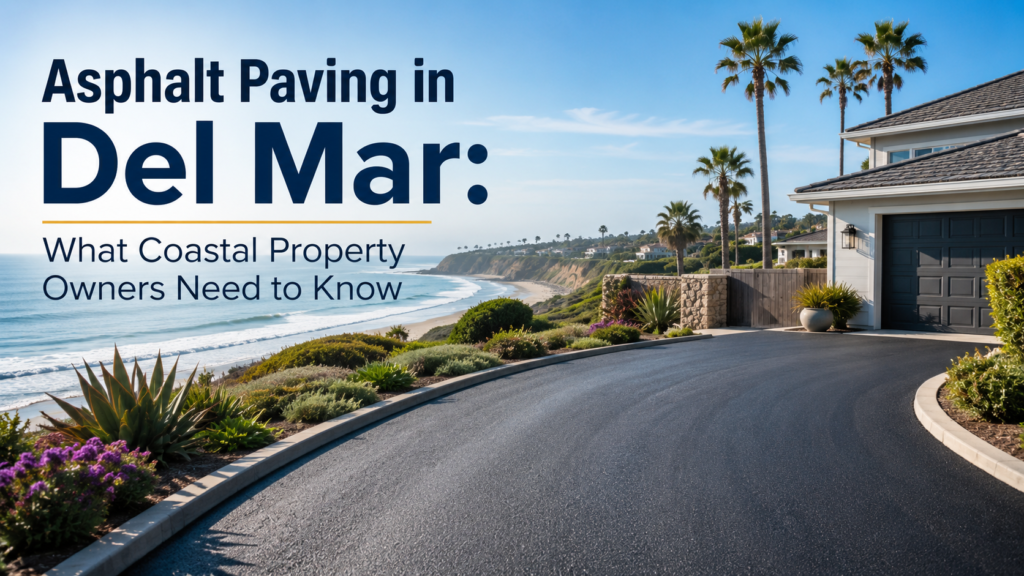
Del Mar is one of San Diego County’s most distinctive coastal communities, known for its cliffside views, upscale residential neighborhoods, the world-famous Del Mar Racetrack, and a charming village atmosphere. With a location directly on the Pacific coast and a mix of affluent homes, boutique commercial properties, and significant foot and vehicle traffic during event seasons, the asphalt paving needs of this community are unique and nuanced.
For homeowners, commercial property managers, and anyone else responsible for a paved surface in Del Mar, understanding the science and practice of Asphalt Contractor Del Mar work is essential. The coastal microclimate, the high standards expected of properties in this area, and the specific challenges of working near the ocean all influence asphalt installation and maintenance in meaningful ways.
The Coastal Climate and Its Effect on Asphalt
Del Mar’s location on the Pacific coast creates a distinct climate that differs significantly from inland San Diego County communities. The coastal marine layer brings high humidity, salt air, and frequent overcast conditions during the morning hours especially in late spring and early summer, during what locals call ‘June Gloom.’ These conditions affect asphalt in several specific ways:
- Salt air exposure: The marine environment accelerates the oxidation of certain materials and can affect the chemical properties of the asphalt binder over time, though this effect is more pronounced on metal infrastructure than on the asphalt itself
- Moderate temperatures: Del Mar rarely experiences the extreme heat that inland communities face, which actually benefits asphalt by reducing thermal stress and softening of the surface during summer months
- Morning moisture: Regular coastal fog and dew mean paved surfaces are frequently damp, which can affect how quickly new sealcoating dries and cures, and can also hasten the deterioration of asphalt that has developed cracks
- Winter rains: Del Mar receives the majority of its modest annual precipitation during winter months, and when storms arrive off the Pacific, they can be intense. Drainage infrastructure on paved surfaces is critically important in this community
These climate conditions mean that asphalt work in Del Mar benefits from careful planning around weather windows and thoughtful attention to drainage design.
People Also Ask: Asphalt Contractor Del Mar Questions
What Types of Asphalt Projects Are Most Common in Del Mar?
Given the residential character of much of Del Mar and the premium value of properties in the area, the most common asphalt projects encountered by an asphalt contractor Del Mar clients work with include:
- Residential driveway installation and resurfacing: With many homes featuring long, sloped driveways leading from street level to hillside properties, proper drainage and compaction are critical
- Parking lot maintenance for commercial and hospitality properties: From hotel and restaurant parking areas to the facilities serving the Del Mar Fairgrounds and Racetrack, high-traffic paved surfaces require regular maintenance
- Private community road maintenance: Many upscale residential communities in and near Del Mar manage private roads and access lanes that require periodic resurfacing and maintenance
- Tennis court and recreational surface paving: Asphalt serves as a base layer for many sports and recreation surfaces in residential and club settings
How Does Asphalt Handle Hillside Properties Common in Del Mar?
Del Mar’s topography is defined by bluffs, hills, and slopes running from the coastal cliffs down to the shoreline. Paving on hillside lots presents specific engineering challenges that a qualified asphalt contractor must address:
- Erosion control: On sloped surfaces, water runoff can be channeled in ways that erode the edges and sub-base of asphalt. Proper edge treatment and drainage channels are essential
- Grade and compaction on slopes: Achieving uniform compaction on a sloped sub-base requires specialized equipment operation techniques to prevent the aggregate base from shifting
- Retaining structures: In some cases, paved areas on hillside properties must incorporate retaining walls or berms to manage water runoff and prevent undermining of the asphalt edge
- Surface drainage engineering: On sloped driveways, the grade itself aids drainage, but the direction and endpoint of that drainage must be carefully considered to prevent erosion or water infiltration into adjacent structures
What Is Alligator Cracking and What Does It Indicate?
One of the questions most frequently raised by property owners inspecting their asphalt surfaces is about alligator cracking the pattern of interconnected cracks resembling the scales of an alligator hide. This is one of the most recognizable forms of asphalt distress and indicates a structural problem rather than a surface problem.
Alligator cracking typically develops when the asphalt surface has been subjected to repeated load applications that exceed what the sub-base structure can support. In Del Mar’s environment, this is often triggered or accelerated by water infiltration into the sub-base: when water saturates the base material, it loses its load-bearing capacity, allowing the asphalt surface above it to flex excessively under traffic loads.
Unlike surface oxidation or minor linear cracking, alligator cracking cannot be effectively addressed through sealcoating or simple crack filling. The standard repair for alligator cracking involves removing the affected area, improving the sub-base drainage and stability, and repaving. Identifying and addressing alligator cracking early before it spreads limits the area that requires full-depth repair.
What Is the Difference Between Resurfacing and Full Reconstruction?
Property owners in Del Mar frequently face the question of whether an aging asphalt surface needs resurfacing or full reconstruction. Understanding the distinction is important:
- Resurfacing (overlay): If the existing asphalt’s structural sub-base is still intact and the surface deterioration is primarily cosmetic extensive oxidation, surface cracking, some minor depressions an overlay can be an effective solution. A new layer of asphalt (typically 1.5 to 2 inches) is applied over the existing surface after appropriate preparation, including crack filling and edge treatment
- Full reconstruction: When the sub-base is compromised, alligator cracking is widespread, or the existing asphalt has heaved or settled significantly, full reconstruction is the appropriate solution. This involves removing the existing asphalt, addressing the underlying issues with the base and drainage, and installing a complete new asphalt system
The decision between these two approaches depends on an honest assessment of the structural condition of the existing pavement. An experienced asphalt contractor can evaluate the pavement through visual inspection, probing, and in some cases core sampling to determine which approach is most appropriate.
ADA Compliance and Parking Lot Striping in Del Mar
Commercial properties and any public-facing facilities in Del Mar must meet Americans with Disabilities Act (ADA) requirements for accessible parking. This includes specific requirements for the number of accessible spaces relative to total parking capacity, the dimensions of accessible spaces and access aisles, slope limitations (no more than 2% in any direction within accessible spaces), and appropriate surface marking and signage.
When an asphalt parking lot is resurfaced or significantly reconfigured, ADA compliance must be reviewed and updated. Many older commercial properties in Del Mar find that their parking lots were built before current ADA standards came into effect, and a repaving project presents an opportunity to bring the facility into compliance.
Environmental Considerations for Asphalt Work in a Coastal Community
Del Mar’s position in a coastal zone means that environmental considerations play an important role in any construction or paving project. Asphalt work can affect water quality through runoff, and Del Mar’s proximity to Los Peñasquitos Lagoon and the Pacific Ocean means that stormwater management is especially important.
Modern asphalt paving practices include stormwater best management practices (BMPs) that address runoff. These may include:
- Installing catch basins and drainage systems that filter runoff before it reaches sensitive coastal water bodies
- Using permeable asphalt in appropriate low-traffic areas to allow water to infiltrate rather than run off
- Proper site containment during paving operations to prevent materials from reaching storm drains
Understanding the long-term value of properly installed and maintained asphalt surfaces and the specific considerations that apply to a coastal community like Del Mar helps property owners make decisions that serve both their immediate needs and the long-term sustainability of their investment.