Fanvil IP Phones in Pakistan: A 2026 Business Buyer’s Guide
Choosing Fanvil IP Phones in Pakistan has become one of the smartest telecom decisions a growing company can make this year. As more offices in Karachi, Lahore, and Islamabad swap ageing analog lines for voice-over-IP, the questions shift from “should we migrate?” to “which desk phone actually fits our workflow?” This 2026 buyer’s guide answers that, with a special look at the flagship smart video model that keeps topping shortlists.
Fanvil has built a reputation for enterprise-grade hardware at prices that make sense for Pakistani SMEs. Instead of locking you into one vendor’s cloud, its phones speak the open SIP standard, so they drop neatly into almost any modern PBX or hosted service. That flexibility is exactly why procurement teams keep circling back to them.
Why Fanvil IP Phones Suit Pakistani Businesses in 2026
The move to IP telephony is no longer experimental. The Pakistan Telecommunication Authority continues to report steady growth in broadband and fixed-line data services, which is the backbone VoIP needs. When your internet is stable, a SIP handset simply works better and costs less than a legacy line.
Here is what makes Fanvil a practical pick for local deployments:
- Open SIP compatibility — pairs with 3CX, Asterisk, FreePBX, Yeastar, and most hosted PBX providers.
- Power over Ethernet — a single cable delivers both data and power, cutting adapter clutter.
- HD voice (Opus & G.722) — noticeably clearer calls than old PSTN lines.
- Scalable range — from entry-level desk phones to smart video flagships, so you buy only what each role needs.
- Local availability — stock, warranty, and support handled in-country shortens lead times.
Meet the Flagship: The Fanvil V67 Smart Video Phone
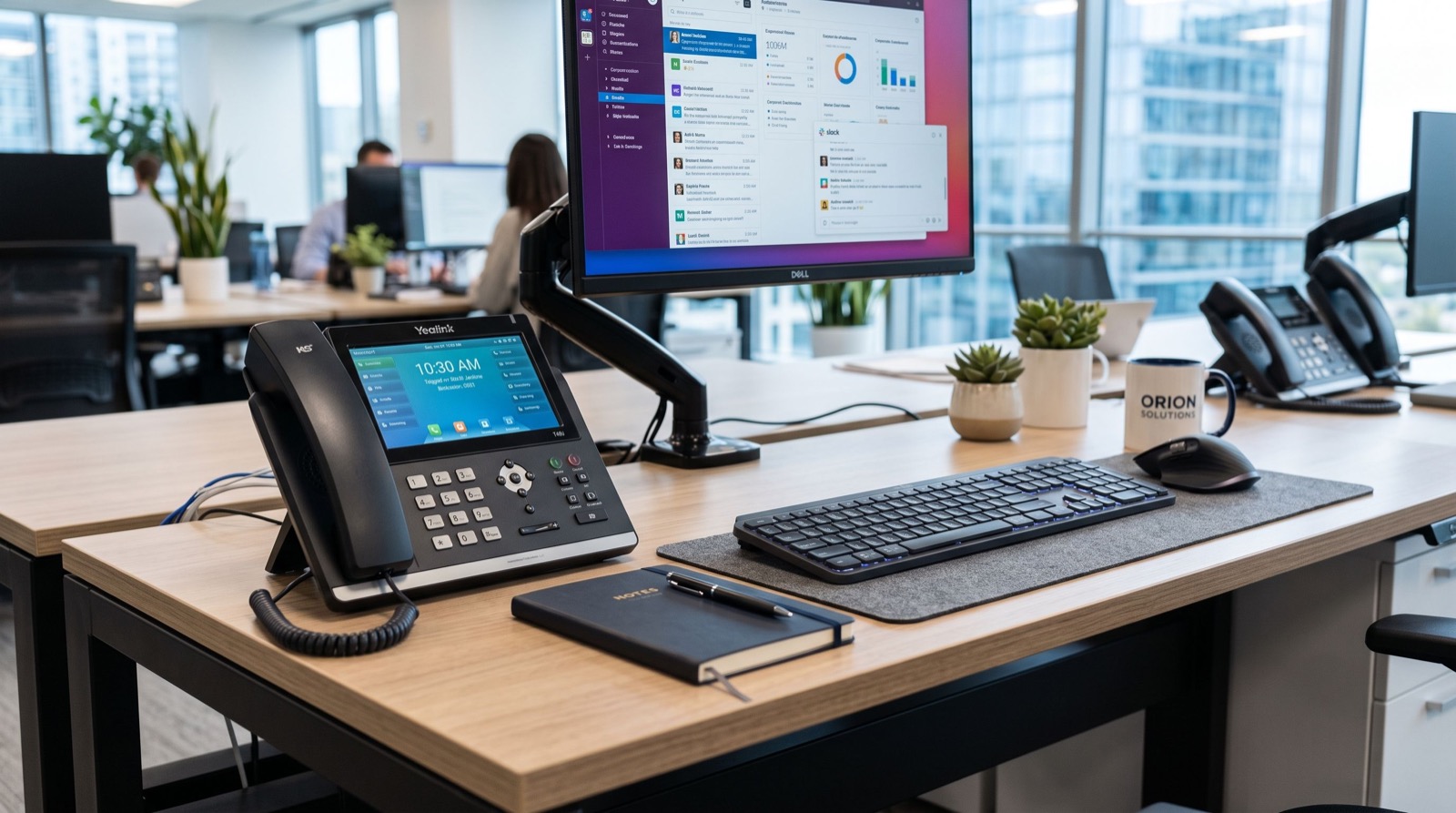
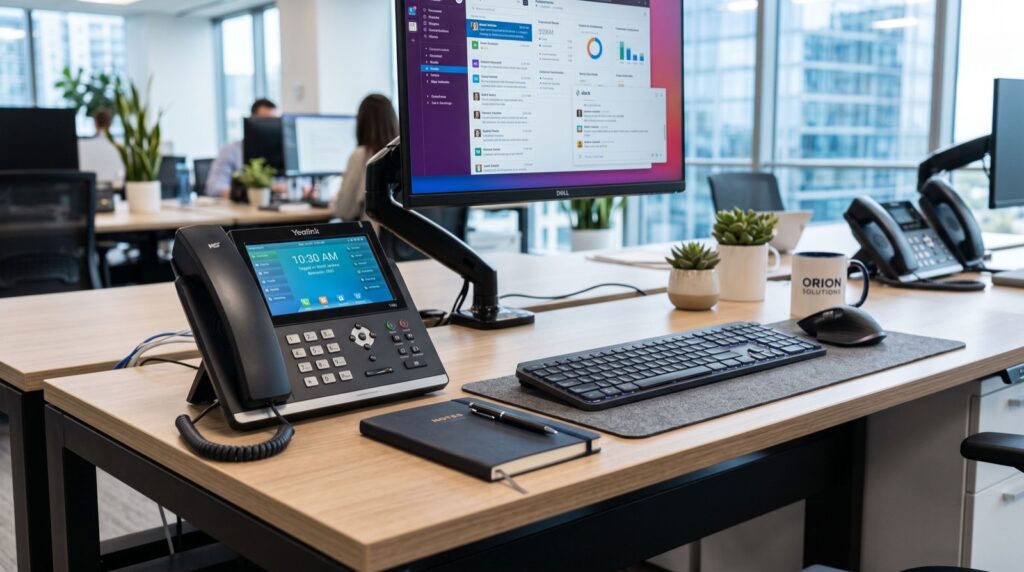
For executives, reception desks, and hybrid meeting rooms, the Fanvil V67 Flagship Smart Video Phone is the standout release on local shelves. It blends a large touchscreen, a built-in or attachable HD camera, and Android-based smarts into a single device that handles both voice and video without a separate conferencing kit.
Where a basic handset just rings and talks, the V67 doubles as a small collaboration hub. Staff can join a video call, check a shared calendar, and transfer a line without juggling a laptop. For a managing director who takes back-to-back calls, that consolidation is the real value.
What does the Fanvil V67 do that cheaper phones cannot?
The short answer: it treats video as a first-class feature rather than an afterthought. A smart touchscreen interface, support for high-resolution video, Bluetooth and Wi-Fi onboard, and an Android app layer mean the V67 can run light productivity apps alongside calls. That makes it ideal for leadership offices and client-facing rooms where appearances and reliability both matter.
Comparing Fanvil Tiers at a Glance
Different roles need different phones. The table below maps common office needs to the right Fanvil tier so you do not overspend on the front desk or underspend in the boardroom.
| Tier | Best for | Key strengths | Typical use case |
|---|---|---|---|
| Entry desk phone | General staff | HD voice, PoE, a few line keys | Open-plan workstations |
| Mid-range colour phone | Supervisors | Colour screen, more BLF keys, headset port | Team leads and sales |
| Enterprise phone | Managers | Large display, expansion modules, Gigabit | Busy call handling |
| V67 smart video flagship | Executives & meeting rooms | Touchscreen, HD video, Android apps, Wi-Fi | Leadership & conferencing |
How to Roll Out Fanvil IP Phones Without Downtime
Migration scares a lot of IT managers, but a staged plan keeps the switchboard live the whole time. Follow this sequence and you avoid the classic “nobody can call us” morning.
- Audit your lines. List every extension, DID number, and the call volume per department.
- Confirm the network. Check bandwidth, enable QoS, and verify your switches supply PoE.
- Pick your PBX. Decide between an on-site server or a hosted SIP trunk provider.
- Pilot one department. Deploy a handful of phones, test call quality for a week, and tune codecs.
- Provision in bulk. Use auto-provisioning to push settings to every handset at once.
- Port numbers and train staff. Move DIDs last, then run a short hands-on session.
Working with an experienced local team for the rollout pays off, because provisioning templates and dial plans are where most self-managed projects stall.
Standards That Keep Fanvil Future-Proof
Fanvil phones are built on the Session Initiation Protocol, the same open standard documented by the IETF in RFC 3261. Because SIP is an industry standard rather than a proprietary protocol, your investment is not tied to a single provider. If you change PBX vendors in 2027 or 2028, the handsets stay.
That open foundation also means firmware updates, security patches, and new codecs continue to arrive, protecting the device over a multi-year lifecycle. For finance teams weighing total cost of ownership, longevity is as important as the sticker price.
Frequently Asked Questions
Are Fanvil IP phones compatible with my existing PBX?
In almost all cases, yes. Fanvil handsets are standard SIP devices, so they register with popular platforms such as 3CX, Asterisk, FreePBX, Issabel, and most hosted providers. You simply enter the SIP server, username, and password, or push them via auto-provisioning.
Do I need special internet for Fanvil IP phones in Pakistan?
You need a stable broadband connection with enough upstream bandwidth. A typical voice call uses under 100 kbps, so even modest fibre or DSL handles several simultaneous calls. Enabling QoS on your router prioritises voice and prevents choppy audio during heavy downloads.
What makes the Fanvil V67 a “smart” video phone?
The V67 runs an Android-based interface with a touchscreen, supports HD video calling, and offers Wi-Fi and Bluetooth out of the box. It can run light apps and act as a desktop collaboration hub, which ordinary voice-only handsets cannot do.
Is Power over Ethernet required?
It is not mandatory, but it is recommended. PoE delivers power through the network cable, so you avoid separate adapters and keep desks tidy. If your switch does not supply PoE, a small power injector or the included adapter works fine.
A Field Tip Most Buyers Miss
Here is a practical lesson from real deployments: spend as much energy on your switch and cabling as on the handsets. The best phone in the world stutters on an overloaded 10/100 switch with no QoS. Before the phones arrive, confirm your network switches supply enough PoE across all ports simultaneously, not just a couple, and that voice traffic is tagged on its own VLAN.
A second overlooked detail is firmware discipline. Set a quarterly reminder to check for Fanvil firmware updates and apply them during a maintenance window. New releases routinely add security fixes and codec improvements, and staying current is the cheapest way to extend a handset’s useful life well beyond the warranty period. Teams that ignore updates are the ones that end up replacing hardware early.
Finally, document your dial plan and provisioning template as you build it. When you add a new hire or a new branch in 2027, that single document turns a day of fiddling into a ten-minute task. Good records are the unglamorous secret behind phone systems that simply keep working.
The Bottom Line for 2026
For any organisation modernising its communications this year, Fanvil IP Phones in Pakistan offer a rare mix of open compatibility, clear HD audio, and a genuine upgrade path all the way to the V67 smart video flagship. Start with a tier that matches each role, plan the migration in stages, and lean on a knowledgeable integrator for provisioning. Do that, and you end up with a phone system that is cheaper to run, easier to scale, and ready for whatever 2027 brings.